Table of Contents
Eye Activity Desensitization and Reprocessing (EMDR) has transformed injury treatment because Francine Shapiro created the methodology in the late 1980s. For therapists looking for to expand their medical toolkit with evidence-based trauma interventions, top quality EMDR training comes to be an essential financial investment in both professional development and client end results. Mind Based EMDR offers a structured path through standard certification, progressed field of expertise, and ongoing examination that deals with the complete range of trauma-informed technique.
Recognizing EMDR Standard Training Needs
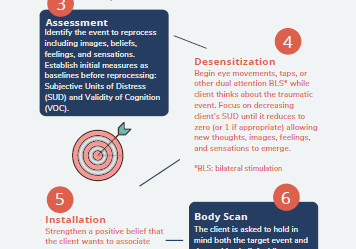
EMDR fundamental training offers as the structure for integrating this healing method into medical method. The standard training design includes about 40-50 hours of guideline split between academic knowing and supervised practical application. Brain Based EMDR frameworks their fundamental training to satisfy EMDRIA (EMDR International Association) requirements, making sure participants obtain detailed protection of the eight-phase procedure that defines EMDR treatment.
The first training components concentrate on the Adaptive Data processing model, which develops the academic backbone of EMDR. Clinicians discover exactly how stressful memories become maladaptively stored in neural networks and just how bilateral stimulation facilitates the brain's all-natural healing procedures. This neurobiological framework identifies EMDR from traditional talk therapy methods and gives professionals with a clear reasoning for treatment methods.
Hands-on method constitutes a significant part of basic training. Individuals participate in role-playing exercises where they alternative between therapist and customer functions, experiencing the EMDR process from both point of views. This experiential element verifies indispensable for creating the nuanced timing and healing presence required for effective EMDR delivery. Brain Based EMDR emphasizes this useful application, recognizing that theoretical understanding alone doesn't convert to professional skills.
Advancing Beyond Basics: Specialized EMDR Educating
Advanced EMDR training addresses intricate clinical discussions that prolong beyond single-incident trauma. Specialists collaborating with dissociative conditions, intricate PTSD, or add-on injury call for specific understanding and customized protocols. Mind Based EMDR's sophisticated training programs dive right into these tough clinical scenarios, offering frameworks for dealing with architectural dissociation, vanity state job, and developmental injury.
The sophisticated educational program generally discovers recent procedure developments consisting of the Flash Strategy, the Reverse Procedure for excessively obstructed processing, and the Inverted Protocol for progressive handling. These specialized approaches expand the therapist's ability to adapt EMDR for clients that don't react optimally to standard protocols. Understanding when and how to customize the basic procedure calls for both theoretical expertise and supervised experience.
Advanced training also addresses source development and installment strategies that enhance client stablizing prior to trauma processing. The Resource Growth and Setup (RDI) method and other preparatory interventions guarantee customers have ample affect law ability before engaging distressing material. Brain Based EMDR incorporates these stabilization comes close to throughout their training continuum, stressing safety and customer readiness as vital considerations.
The Critical Function of EMDR Assessment
EMDRIA qualification calls for 20 hours of examination adhering to standard training, reflecting the expert agreement that oversaw method shows necessary for qualified EMDR distribution. EMDR assessment groups supply structured opportunities for clinicians to existing situations, receive feedback, and improve their restorative technique under expert guidance. Brain Based EMDR deals both specific and group appointment alternatives that satisfy accreditation demands while promoting recurring professional growth.
EMDR Certification ConsultationExamination addresses the unavoidable difficulties that emerge when applying EMDR procedures to real-world medical complexity. Professional help therapists browse blocked processing, handle abreactions, and adjust procedures for particular customer presentations. This assisted analytic increases skill growth and prevents the entrenchment of inefficient patterns that can accompany not being watched practice.
Past accreditation demands, numerous seasoned EMDR specialists keep recurring assessment partnerships throughout their professions. The consultation process gives responsibility, fresh point of views on difficult cases, and direct exposure to evolving ideal techniques within the EMDR community. Brain Based EMDR's assessment model stresses joint learning, producing a supportive environment where therapists can honestly talk about professional issues without judgment.
Building a Trauma-Informed Healing Structure
Reliable EMDR method calls for greater than procedure memorization-- it demands a detailed trauma-informed approach that informs every facet of healing involvement. Trauma-informed training for specialists addresses just how traumatic experiences form client discussion, connection patterns, and therapy process. Mind Based EMDR integrates trauma-informed concepts throughout their training curriculum, recognizing that technological effectiveness without injury sensitivity limitations therapeutic effectiveness.
Trauma-informed treatment starts with recognizing exactly how injury influences the anxious system and shapes defensive adjustments. Therapists discover to acknowledge trauma actions consisting of hypervigilance, dissociation, and hyperarousal as adaptive survival mechanisms rather than pathological signs. This reframing fundamentally moves the restorative partnership from a problem-focused stance to a strengths-based recognition of client durability.
The training emphasizes creating physical and mental safety and security within the therapeutic environment. Injury survivors usually experience the treatment space itself as possibly threatening, calling for thoughtful interest to seating setups, lighting, personal privacy, and predictability. Mind Based EMDR shows professionals to collaborate with clients in establishing safety procedures and respecting freedom throughout the therapy process.
Choosing Quality EMDR Training Programs
The expansion of EMDR training choices creates both possibilities and difficulties for specialists looking for accreditation. Quality training programs differentiate themselves through EMDRIA authorization, experienced trainers with considerable scientific backgrounds, and thorough coverage of both procedure auto mechanics and theoretical structures. Mind Based EMDR's training framework shows current best techniques in grown-up discovering, incorporating lecture, presentation, supervised practice, and consultation in developmentally suitable series.
Trainer know-how considerably affects training top quality and individual results. Effective EMDR instructors have not just technical proficiency yet additionally the capability to develop mentally risk-free discovering environments where individuals can practice vulnerable skill growth. Mind Based EMDR's trainers bring extensive clinical experience treating diverse trauma presentations, offering students with exposure to real-world case instances that illuminate protocol application throughout various client populations.
The training layout-- whether intensive weekend break workshops, expanded once a week sessions, or hybrid online-in-person versions-- affects discovering retention and ability growth. Research on adult understanding suggests spaced exercise with chances for between-session application returns premium end results compared to compressed extensive styles. Brain Based EMDR deals flexible training formats that suit diverse discovering choices while keeping strenuous criteria for scientific competence.
The Financial Investment in EMDR Training: Specialist and Customer Outcomes
EMDR Certification Consultation
EMDR training represents a significant investment of time, energy, and financial sources. Fundamental training expenses generally vary from $1,500 to $3,000, with added costs for consultation, progressed training, and qualification costs. Nonetheless, the return on this investment materializes in increased scientific capabilities, boosted client outcomes, and often raised practice income as trauma-specialized services command premium compensation prices.
From a client outcome point of view, EMDR consistently shows exceptional efficiency for PTSD treatment compared to traditional healing techniques. Meta-analyses program EMDR produces medically considerable signs and symptom reduction in less sessions than cognitive-behavioral therapy, converting to minimized suffering and faster healing for trauma survivors. Therapists learnt EMDR can use customers evidence-based treatment that resolves injury at the neurobiological degree, essentially settling distressing memories instead than just handling symptoms.
Mind Based EMDR's detailed training path-- from fundamental certification via advanced expertise and recurring examination-- gives specialists with the knowledge, abilities, and assistance required for positive, proficient injury treatment. Their emphasis on neurobiological foundations, trauma-informed method, and useful application creates clinicians capable of adjusting EMDR protocols to diverse presentations while keeping fidelity to the core technique that makes EMDR distinctively effective for injury resolution.

Table of Contents
Latest Posts
Integrating Transition in Affirming Internal Family Systems
Important Considerations in a IFS Therapist Who Specializes in Healthcare Workers
Understanding Psychodynamic Treatment: A Deep Dive into Comprehensive Psychological Assessment and Therapy
Navigation
Latest Posts
Integrating Transition in Affirming Internal Family Systems
Important Considerations in a IFS Therapist Who Specializes in Healthcare Workers
Understanding Psychodynamic Treatment: A Deep Dive into Comprehensive Psychological Assessment and Therapy